
⚙️ Civilizing LED Masks
Hi, Hardwirers!
What’s emerging is a phase of consumer tech, one where form factors, constraints, and integration matter more than bold claims about cognition.
BEAUTY
Flexible LEDs Try to Civilize Skincare Hardware
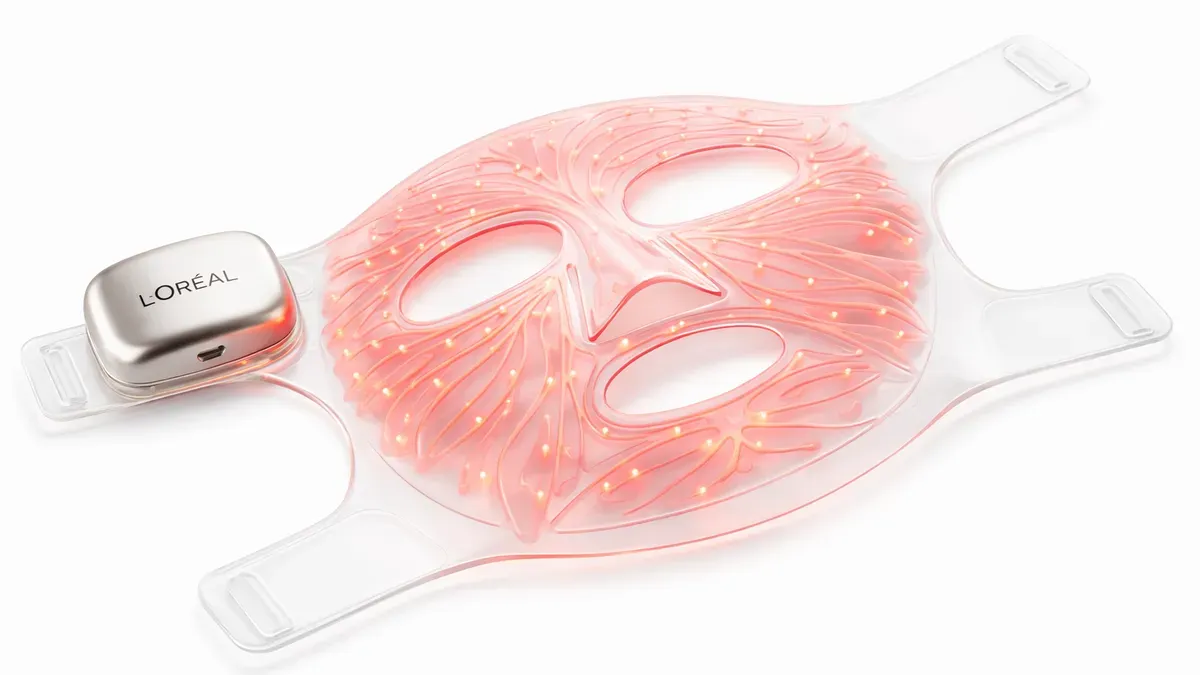
👀 What is it: L’Oréal LED Face Mask is a CES-era prototype that promises clinical light therapy without the usual plastic helmet. It uses a thin, flexible silicone substrate embedded with LEDs to deliver red and near-infrared light across the face. The claim is uniform exposure, shorter sessions, and better compliance than rigid consumer masks that never quite fit real faces.
🧪 Reality Check: The real innovation is mechanical and electrical, not dermatological. A conformal silicone matrix keeps emitter distance consistent, which improves dose uniformity and reduces hot spots. Transparent microcircuits regulate output so each zone stays within a tight power envelope. That matters because photobiomodulation fails quietly when intensity drifts. This design pressures incumbents built on hard shells and loose tolerances.
⚙️ Our take: The physics is old, but the packaging is finally competent. If durability and thermal management hold up outside demos, this is a meaningful step toward repeatable at-home light therapy rather than another glowing mask with vibes.
AI PIN
Motorola Tests a Wearable AI Without Committing Yet
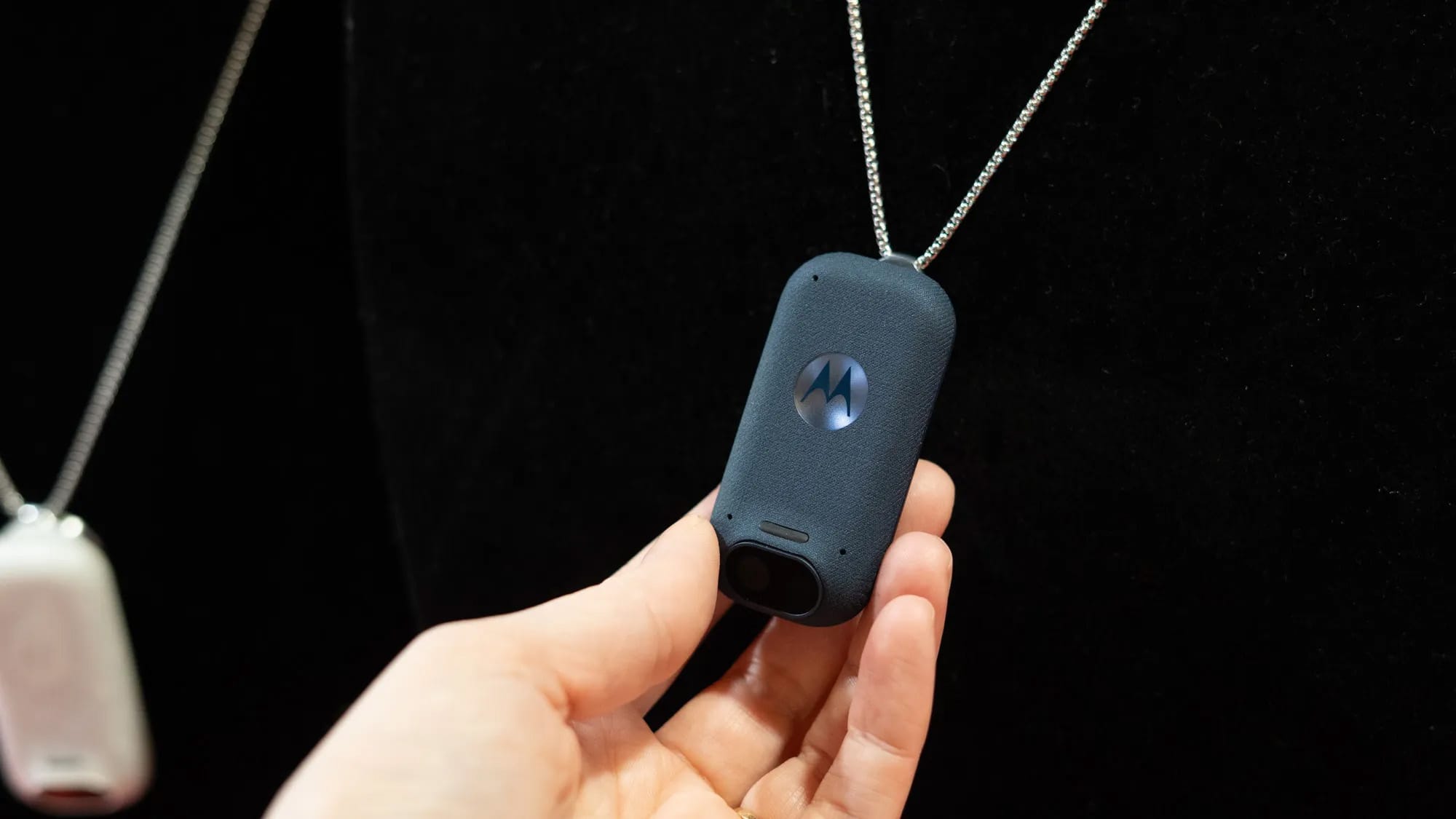
👀 What is it: Motorola quietly showed a wearable AI proof of concept at CES 2026. It looks like a necklace, has no screen, and runs its own assistant called Qira. It can recognize objects, summarize what it sees, and trigger actions on a paired phone. Motorola stressed this is not a product yet.
🧪 Reality Check: This lands in a space littered with failed bets. Humane’s AI Pin collapsed under price and usefulness. Other AI necklaces never escaped novelty. Motorola is probing whether minimalist, camera first companions can offload real actions, like launching Maps, without demanding new habits. The dependency remains the phone, battery life, and constant cloud inference.
⚙️ Our take: Motorola is testing behavior, not selling hardware. If users accept invisible AI that quietly acts through their phone, this category inches forward. If not, wearable AI stays stuck as demos waiting for a real reason to exist.
PET TECH
Your Cat’s Feeder Files a Medical Report
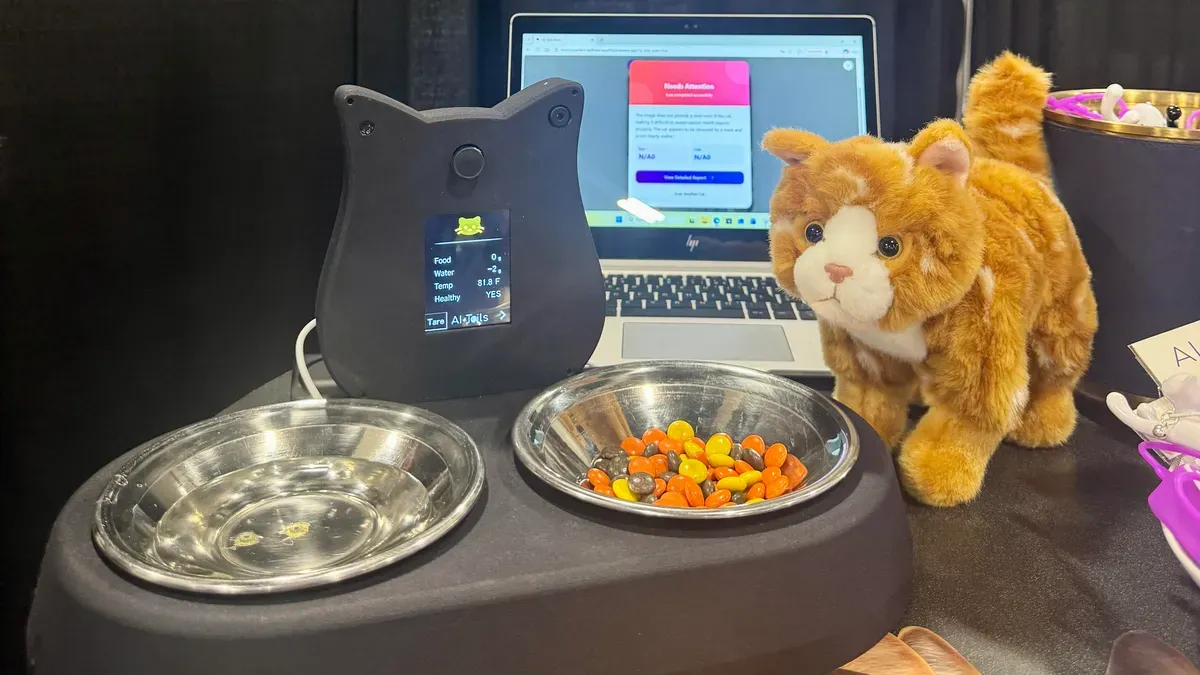
👀 What’s happening: AI Tails Smart Feeding and Drinking Station positions itself as an AI health monitor for cats. It tracks food intake, water consumption, surface temperature, and facial cues through cameras and sensors, then flags anomalies via an app. The promise is early illness detection embedded into routine feeding. The framing leans hard on AI language, even though the system behaves more like automated observation than reasoning.
🌍 How this hits reality: Under the hood, this is classic pattern recognition and thresholding, not a large model making inferences. There is no visible multimodal reasoning, adaptive dialogue, or model transparency. Its strength is consistency, not intelligence. The value comes from longitudinal data capture, not model depth. Calling it AI inflates expectations and risks disappointment when outputs feel binary and conservative.
⚙️ Key takeaway: Useful hardware wrapped in AI branding. It is a monitoring appliance, not a thinking system. Effective if positioned honestly, fragile if judged by modern AI standards.
TOGETHER WITH US
AI Secret Media Group is the world’s #1 AI & Tech Newsletter Group, reaching over 2 million leaders across the global innovation ecosystem, from OpenAI, Anthropic, Google, and Microsoft to top AI labs, VCs, and fast-growing startups.
We operate the industry’s most influential portfolio of newsletters, each shaping a different frontier of the AI & Tech revolution:
Be Smarter in 5 Minutes
- AI: AI Secret
- Tech & Business: Bay Area Letters
- Marketing: Marketing Secret
Discover the Future Products
- AI Launchpad: Oncely
- Robotics: Robotics Herald
- Hardwares: The Hardwire
We've helped promote over 500 Tech Brands. Will yours be the next?
Email our co-founder Mark directly at mark@aisecret.us if the button fails.