
⚙️ Hijacks Your Skull
Hi, Hardwirers!
CES 2026, day one again. We’re looking at products that don’t just sit around you, but actively adapt to you
NEW TECH
A Candy That Hijacks Your Skull
👀 What is it: Lollipop Star is an edible audio device disguised as candy, shown at CES 2026. It claims to play licensed music through bone induction when pressed against teeth or the back of the mouth. Tracks from Ice Spice and Akon are preloaded, turning eating into a private listening session. The pitch leans hard on novelty while borrowing language from medical grade bone conduction.
🧪 Reality Check: Bone conduction itself is real and well understood. The engineering trick here is coupling a tiny vibration transducer into a sugar matrix without killing output or structural integrity. Audio fidelity will be narrow band and volume limited by oral contact pressure. The real innovation is not sound quality but packaging a known mechanism into a consumable object that survives saliva, bite force, and hygiene constraints.
⚙️ Our take: This is not audio innovation. It is materials and packaging cleverness applied to attention economics. As a demo it works. As a repeat use product, the physics and mouthfeel will decide faster than the playlist ever could.
LOCK
Locks Finally Know Where You Are
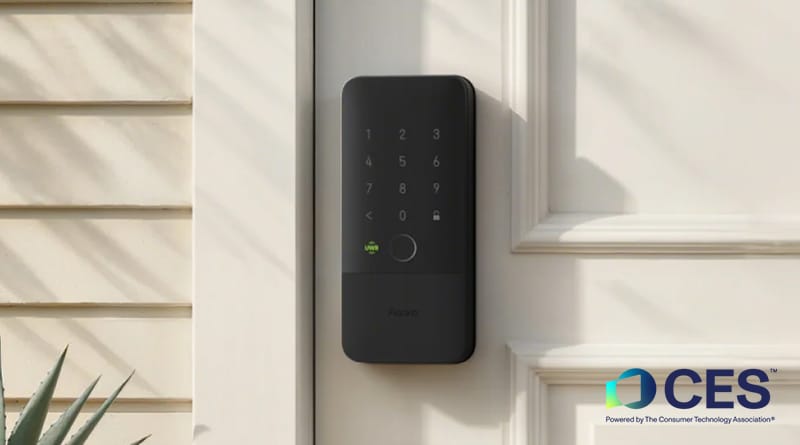
👀 What is it: Smart Lock U400 is Aqara’s UWB powered deadbolt showcased at CES 2026, positioned as a preview of where smart access control is headed rather than a flashy launch stunt. It promises hands free unlocking based on precise approach detection, built on Apple Home Key, Thread, and Matter. The ambition is frictionless entry without repeating Bluetooth’s long list of compromises.
🧪 Reality Check: UWB’s Time of Flight ranging and angle awareness let the lock judge intent instead of proximity, which directly reduces false unlocks and relay attack exposure. Thread removes hub dependency delays, while Matter prevents ecosystem lock in after the show lights dim. Gyroscope based auto lock and external battery recovery suggest design shaped by edge cases, not booths.
⚙️ Our take: As a CES 2026 exhibit, this is a credible signal, not vapor. If UWB becomes affordable at scale, proximity based smart locks quietly become legacy hardware.
GAMING
Accessories Stop Being Afterthoughts
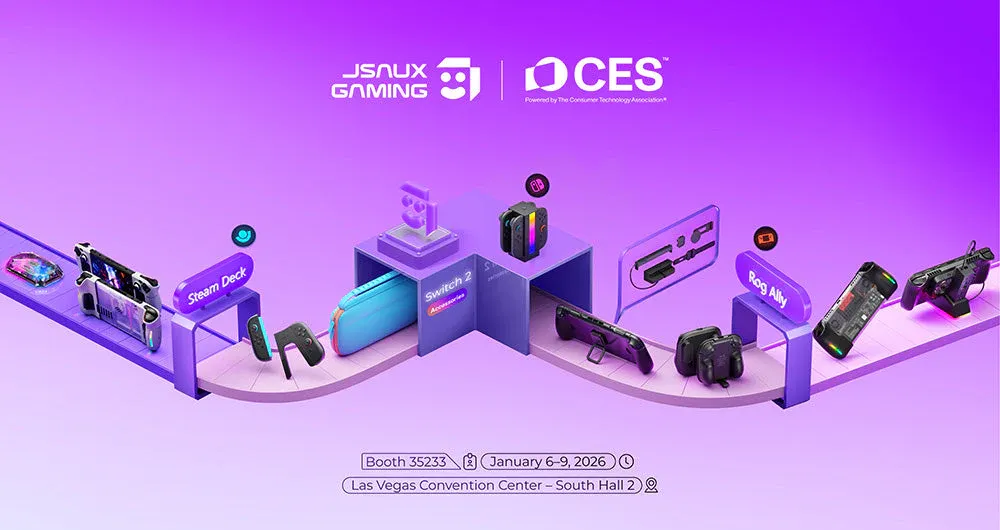
👀 What is it: At CES 2026, JSAUX showcases its FlipGo monitors alongside a new Switch 2 accessory stack, combining high-refresh portable displays, multi-controller charging docks, modular protection, and compact hubs. The claim is not innovation for its own sake but a cleaner way to move between handheld, docked, and desktop play without rewiring habits or sacrificing performance.
🧪 Reality Check: The gains for players are practical. A 144Hz portable panel finally makes off desk competitive play tolerable. A dock that charges five controllers while handling wired networking removes party night bottlenecks. Modular cases protect without blocking accessories. These are friction killers. They reward players who rotate modes often and expose how poorly first party gear scales beyond single device use.
⚙️ Our take: Nothing here changes how games are made. It changes how often players tolerate setup pain. That alone is a quiet advantage.
HOME TECH
Family Tech Without Training Wheels
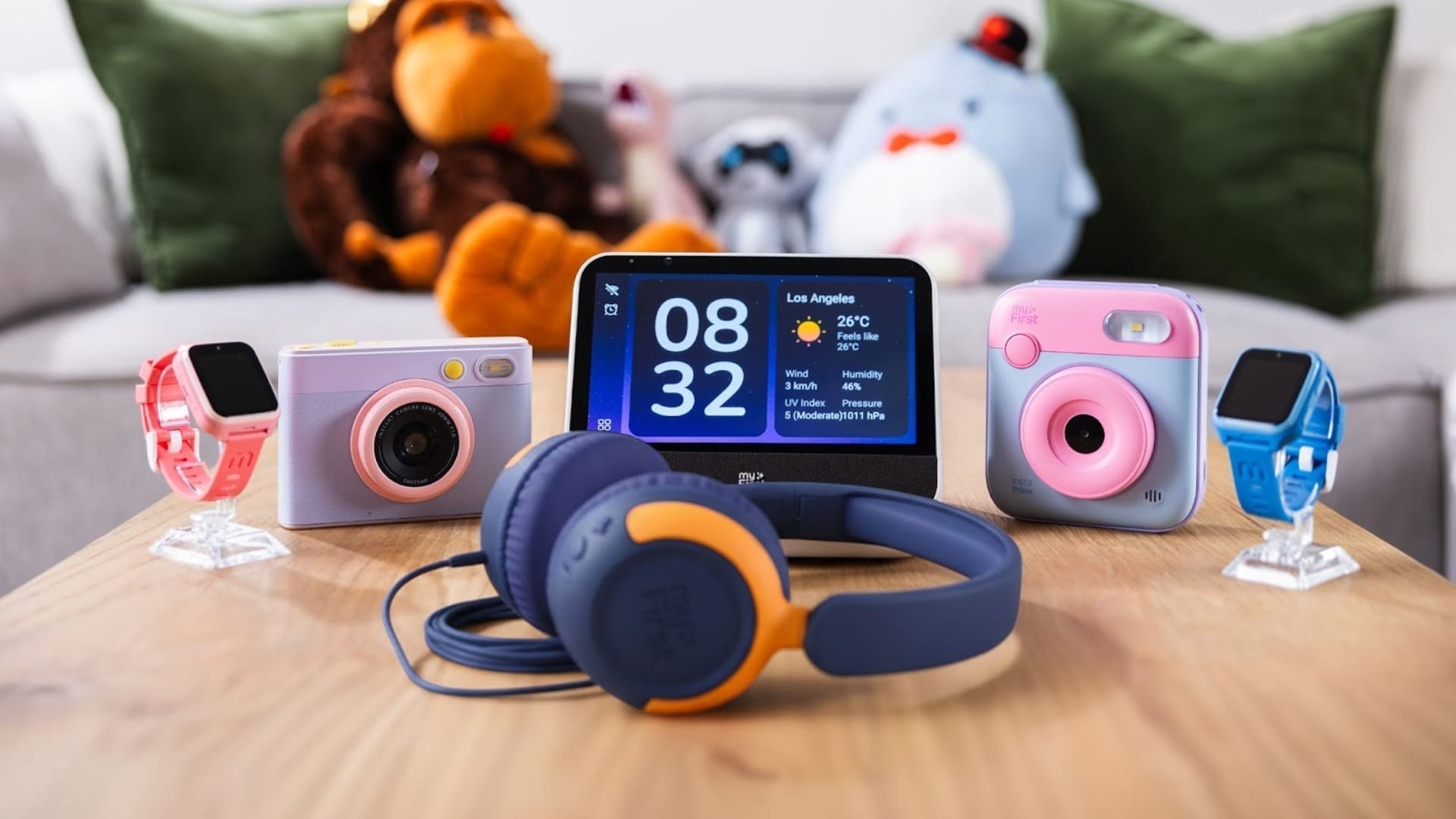
👀 What is it: At CES 2026, myFirst is presenting its full family tech ecosystem as a single, connected system. Watches, cameras, headphones, a digital frame, and the Circle platform are positioned as a cohesive environment rather than isolated kid gadgets. The pitch is familiar but ambitious: safety without lockdowns, creativity without chaos, and parental control that stays mostly invisible until it is actually needed.
🧪 Reality Check: The real strength is architectural, not cosmetic. Circle 4.0 acts as a shared control plane across hardware, tying location, communication, and content into one persistent graph. Frame Clario quietly anchors the system at home, while wearables and cameras extend it outward. This reduces setup friction and fragmentation, which is where most family tech fails under real usage pressure.
⚙️ Our take: This ecosystem works because it treats families as distributed systems, not supervised users. The hardware is competent, but the integration discipline is the differentiator, and it exposes how shallow most kid-first devices still are.
TOGETHER WITH US
AI Secret Media Group is the world’s #1 AI & Tech Newsletter Group, reaching over 2 million leaders across the global innovation ecosystem, from OpenAI, Anthropic, Google, and Microsoft to top AI labs, VCs, and fast-growing startups.
We operate the industry’s most influential portfolio of newsletters, each shaping a different frontier of the AI & Tech revolution:
Be Smarter in 5 Minutes
- AI: AI Secret
- Tech & Business: Bay Area Letters
- Marketing: Marketing Secret
Discover the Future Products
- AI Launchpad: Oncely
- Robotics: Robotics Herald
- Hardwares: The Hardwire
We've helped promote over 500 Tech Brands. Will yours be the next?
Email our co-founder Mark directly at mark@aisecret.us if the button fails.