
⚙️ Usable 4K Vision
Hi, Hardwirers!
In a week when 4K vision finally becomes truly usable, the edges of computing are shifting fast.
VISION
Night Storm X3 Turns Darkness Into Usable 4K Vision
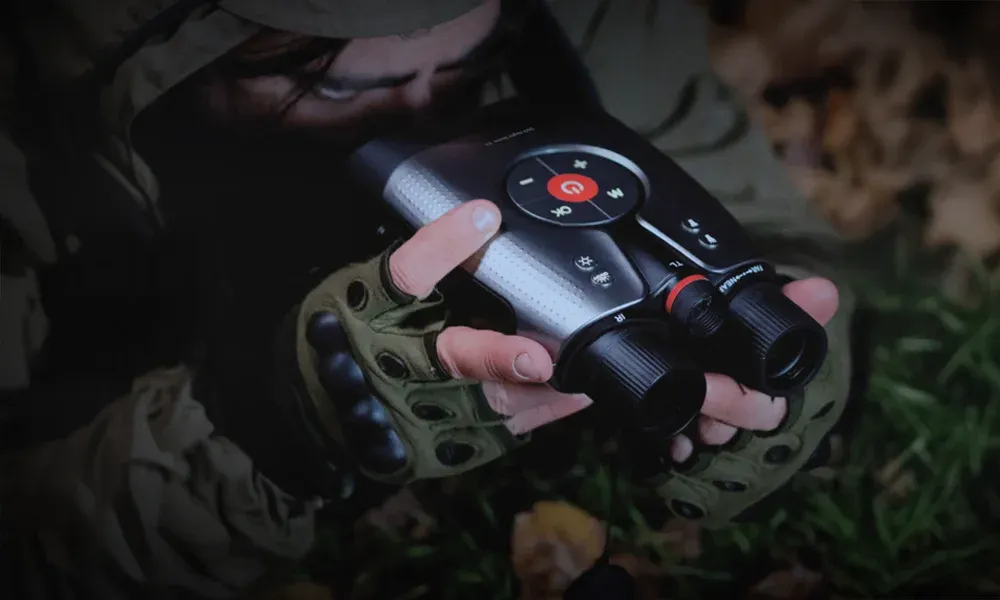
Night Storm X3 is a digital night vision device built around a simple claim. Native 4K, full color imaging in near total darkness at long range. The engineering intent is pragmatic. Replace fragile image intensifier tubes with a high sensitivity CMOS sensor, fast glass, and heavy ISP tuning, then pair it with active infrared illumination when photons run out. This puts it closer to a camera system than a legacy optic. It avoids the mythology of analog night vision and instead leans on silicon, compute, and recording. That alone explains why it exists.
The real advantage shows up in identification, not discovery. Full color at night reduces misclassification under stress. 4K resolution means digital zoom stays usable longer instead of collapsing into noise. Built in recording, storage, and display turn it into a documentation tool as much as an observation one. For hunting, patrol, perimeter monitoring, and search work, that matters. It pressures traditional tube based systems that still trade clarity for mystique. Thermal still wins at spotting heat, but X3 closes the gap when you need to know what you are looking at.
The limits are predictable and acceptable. Long range performance depends on infrared illumination, which costs power and stealth. Pitch black nights still punish sensors. Even so, the trajectory is favorable. Silicon improves every year. Tubes do not. If pricing stays rational, Night Storm X3 lands as a capable, modern night optic with fewer superstitions and more usable output.
AI
Pocket AI Hardware That Bends Physics Carefully
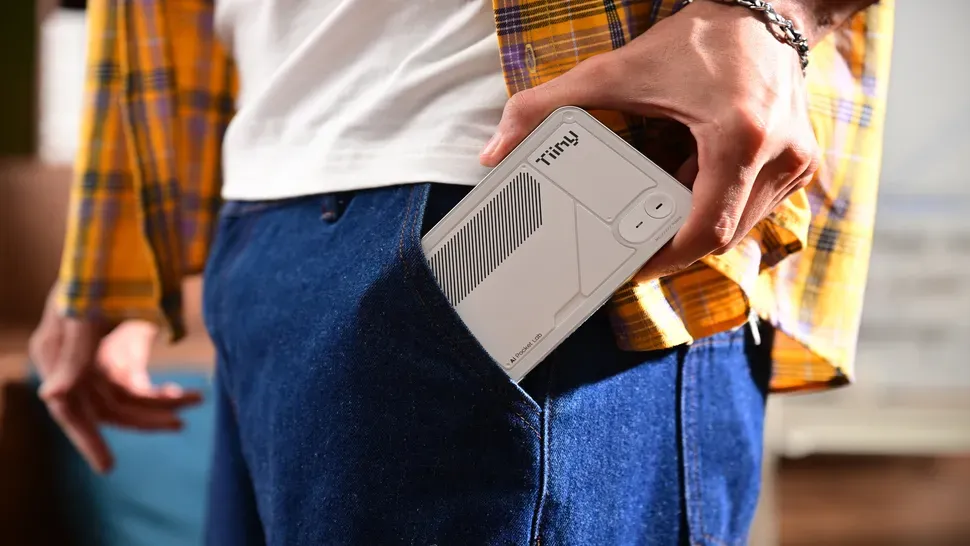
Tiiny AI Pocket Lab presents itself as the smallest pocket sized AI supercomputer designed to run large language models locally. The claim is simple and ambitious. 10B to 120B parameter models. No cloud. No discrete GPU. About 65W of system power. The hardware choice explains the intent. A 12 core ARM CPU sits beside a custom heterogeneous AI module, backed by 80GB of LPDDR5X and a 1TB SSD. Tiiny AI is not chasing peak benchmarks. It is chasing autonomy, privacy, and a form factor closer to an external drive than a workstation.
The real strengths come from efficiency stacking. Large memory capacity keeps models resident and avoids constant paging. The NPU handles dense math while the CPU manages control and irregular workloads. TurboSparse and PowerInfer reduce effective compute cost rather than inflating silicon. For local agents, long context reasoning, offline analysis, and sensitive data workflows, this matters more than raw FLOPS. It quietly pressures cloud inference economics and makes many edge GPU boxes look wasteful.
The trajectory is promising but bounded. Thermal headroom, sustained throughput, and real world latency will define adoption. OTA hardware language is sloppy, but the platform direction is sound. This is not a server replacement. It is a credible personal AI node. Low risk for developers. Moderate pressure for edge compute vendors.
HOME TECH
Battery-Powered Wall Mount for Modern TVs
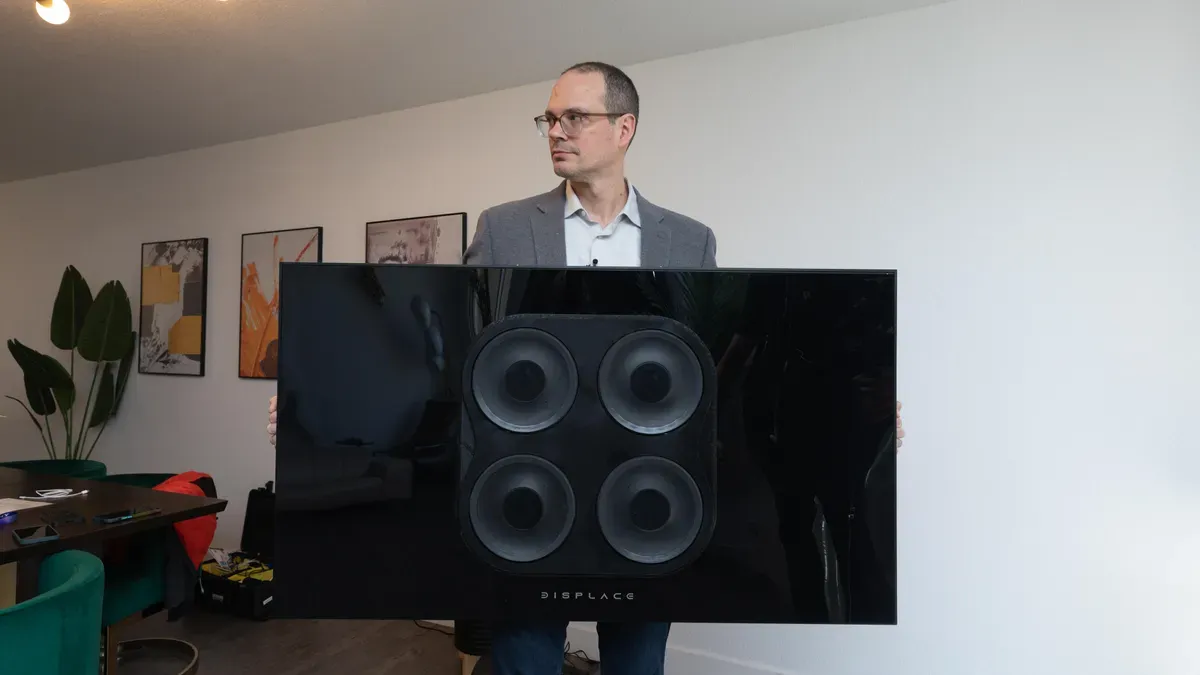
Displace Hub is a wall mount that tries to make ordinary televisions behave like wireless ones. It uses active suction to attach to the wall, carries a built in battery, and hides a small PC behind the panel. The pitch is not new content or better pixels. It is removing the need for a wall outlet and drilling. Your existing TV plugs into the Hub instead of the wall. HDMI still carries video. Power is the real target. Compared with the usual smart TV cycle, this is an accessory first, not a display upgrade.
What the engineering actually delivers is flexibility. The suction system avoids studs and spreads load cleanly, which matters in rentals, showrooms, and temporary installs. The internal battery gives roughly five to ten hours depending on panel draw, which is enough for events, demos, and staged spaces. The Intel N150 based PC allows the TV to act as a large monitor for ambient dashboards or simple compute tasks. This quietly pressures ultra premium wireless TVs by offering most of the installation benefit without replacing the screen.
The limits are clear but acceptable. Battery endurance caps daily use, and charging remains a chore. The software layer is thin today, but optional rather than required. Overall, Displace Hub makes sense as a space solution. It is not essential for homes, but it is genuinely useful where power and permanence are problems.
TOGETHER WITH US
AI Secret Media Group is the world’s #1 AI & Tech Newsletter Group, reaching over 2 million leaders across the global innovation ecosystem, from OpenAI, Anthropic, Google, and Microsoft to top AI labs, VCs, and fast-growing startups.
We operate the industry’s most influential portfolio of newsletters, each shaping a different frontier of the AI & Tech revolution:
Be Smarter in 5 Minutes
- AI: AI Secret
- Tech & Business: Bay Area Letters
- Marketing: Marketing Secret
Discover the Future Products
- AI Launchpad: Oncely
- Robotics: Robotics Herald
- Hardwares: The Hardwire
We've helped promote over 500 Tech Brands. Will yours be the next?
Email our co-founder Mark directly at mark@aisecret.us if the button fails.